
How Can I Use Denture Adhesive Safely Without Hiding Loose Dentures?
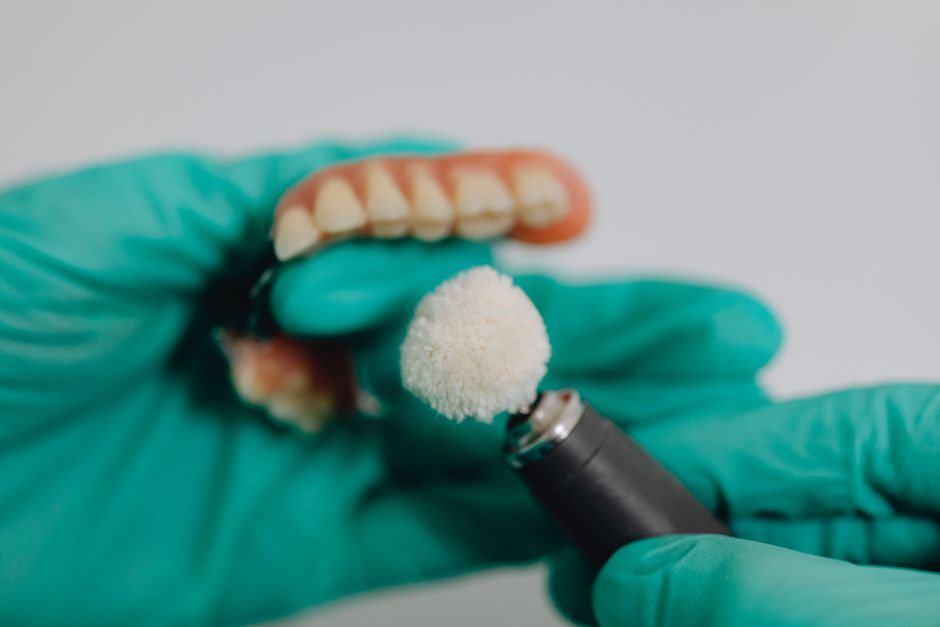
Use denture adhesive in small amounts, remove it from both dentures and your mouth every day, and treat oozing, soreness, or a growing need for adhesive as signs to seek a dental fit check. Adhesive can add retention, but it does not repair a poor fit. Dentures that keep slipping need assessment for adjustment, relining, or replacement.
Adhesive is a helper, not a repair kit. The difference matters most when a familiar denture starts asking for more and giving less.
How do I get denture adhesive off my gums and palate?
Remove adhesive each day by taking out the dentures, rinsing away loose food and adhesive, then cleaning the denture and the mouth separately.
The American Dental Association advises daily removal of adhesive from both the denture and oral cavity. Its denture-care guidance describes rinsing away food and adhesive, soaking and gently brushing dentures with a nonabrasive denture cleanser.
That sequence keeps the jobs separate. Clean the denture outside the mouth. Clean the gums and palate gently with a soft toothbrush or damp cloth. Denture cleansers belong on the denture, not in the mouth, according to the ADA.
- Remove the denture and rinse away loose residue.
- Soak and gently brush the denture with a nonabrasive denture cleanser.
- Wipe or gently brush adhesive residue from the gums and palate.
- Rinse the mouth and inspect it for tenderness, ulcers, or inflammation.
Stubborn residue is not proof that stronger cleaning is better. A 2022 laboratory study indexed by PubMed found that foam denture cleaners varied in adhesive-removal performance, and prolonged immersion in some products can affect denture-base and reline-material surfaces. Follow the cleaner and denture-care instructions rather than extending soak time on guesswork.
Why is denture adhesive so hard to remove at night?
Denture adhesive is hard to remove at night because it is made to hold the denture in place, and using too much leaves more material on the denture and oral tissues.
The pattern is plain: a product used for grip can become difficult to clean when it spreads beyond the denture. The U.S. Food and Drug Administration identifies adhesive that oozes into the mouth as a sign that too much was used.
Cleanup difficulty is therefore useful information. It points first to amount, not to a need for a heavier layer. The 2014 evidence-based guideline from the Journal of the American Dental Association and American College of Prosthodontists says adhesive should be completely removed from the prosthesis and oral cavity every day.
Retention is one problem. Residue is another. More product can worsen both.
How much denture adhesive should I use?
Use only the amount needed for added retention and stability, not an expanding amount to compensate for slipping.
The 2014 JADA/ACP guideline recommends three or four pea-sized dollops on each denture. It directs patients who need increasing amounts for the same retention to see a dentist or dental professional for an evaluation of denture fit and stability.
| What you notice | What the evidence indicates |
|---|---|
| Adhesive stays within the denture and comes off during daily cleaning | The amount is more consistent with controlled use. |
| Adhesive oozes into the mouth | The FDA identifies this as a sign that too much was used. |
| More adhesive is needed to get the same hold | The 2014 JADA/ACP guideline calls for an assessment of fit and stability. |
| Adhesive is needed to eat or to keep dentures in place socially | The ADA lists this as a reason for dental evaluation. |
Do not use the table as a home diagnosis. It is a boundary line. Adhesive has a narrow task: added retention. Fit belongs to the denture and the mouth.
Is it safe to wear denture adhesive every day?
Daily adhesive use requires daily removal, restrained application, and periodic professional assessment when use continues or changes.
The 2014 JADA/ACP guideline says evidence on oral-tissue effects from adhesive use longer than six months is lacking. It also recommends annual dental or prosthodontic checks for denture fit, function, oral lesions, bone loss, and oral health.
Zinc deserves a label check. The National Institutes of Health Office of Dietary Supplements states that some denture adhesive creams contain zinc and that many creams have been reformulated without it. The NIH also links chronic excessive use with zinc toxicity, copper deficiency, and neurologic disease.
The FDA reports nerve damage, numbness, and tingling in case reports involving chronic overuse of zinc-containing adhesive. Zinc-free products are available, but changing formats or ingredients does not solve a denture that no longer fits.
The ADA advises dental evaluation for chronic inflammation, oral ulcers, instability, adhesive use more than once daily, or dentures older than five years. Pain and slipping are not problems to bury under another layer.
Frequently Asked Questions
Why do my dentures become loose by afternoon?
Dentures can become unstable when their fit and retention no longer match the mouth. The FDA explains that gradual bone shrinkage can loosen dentures, and the 2014 JADA/ACP guideline says an increasing need for adhesive calls for a professional assessment of fit and stability. More adhesive does not correct the underlying mismatch.
When should loose dentures be relined instead of using more adhesive?
A reline or replacement enters the discussion when adhesive is needed in increasing amounts, dentures remain unstable, or oral sores and chronic inflammation develop. The FDA states that properly fitted and maintained dentures generally should not require adhesive, while the ADA notes that ill-fitting dentures may need relining or replacement. A dentist or prosthodontist determines which option fits the condition of the denture and oral tissues.
Should I choose denture adhesive cream, powder, or strips?
The ADA lists creams, powders, wafers, and strips as adhesive formats. The right format is the one used in the smallest effective amount and removed fully each day; format does not turn an ill-fitting denture into a well-fitting one. People concerned about zinc can look for products labeled zinc-free, since the NIH notes that many denture creams have been reformulated without zinc.
A denture that holds with less adhesive tells a better story than one that holds with more.
Sources
- U.S. Food and Drug Administration: Denture Adhesives
- American Dental Association: Dentures
- National Institutes of Health Office of Dietary Supplements: Zinc Fact Sheet for Health Professionals
- Journal of the American Dental Association / American College of Prosthodontists: Evidence-Based Clinical Practice Guideline
- PubMed: Properties and Characteristics of Foam Denture Cleaners as Denture Adhesive Removers
Disclaimer: This article is for general information only and is not medical advice. It is not a substitute for diagnosis or treatment by a qualified healthcare professional. Always speak to your doctor before acting on anything you read here.