
How do I test whether AI-assisted marketing workflows save time or improve results?
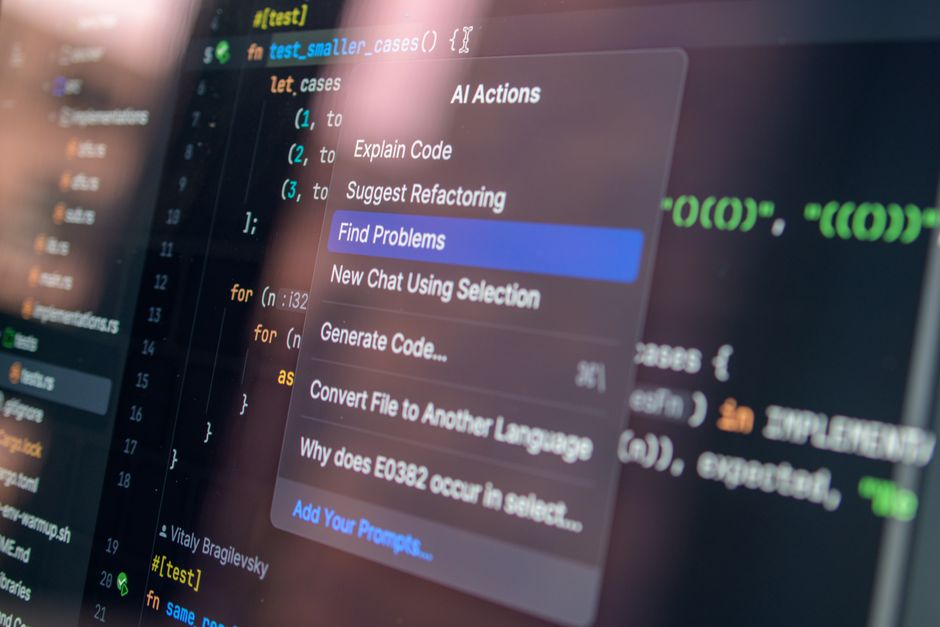
Test an AI-assisted campaign workflow against a documented human-only baseline. Track time and output quality, set success thresholds before the pilot, and apply the same accuracy, brand, and review checks to both workflows. Compare similar tasks under similar conditions, then decide whether the time saved or results improved enough to justify any added review work.
How do I prove an AI marketing tool is actually saving my team time?
Prove time savings by timing the entire task—not just the minutes spent generating a draft—and comparing it with the same task in your current workflow. Include briefing, prompting, fact-checking, editing, approvals, and rework. A draft produced quickly can still consume more total time if it needs extensive correction.
First, record a baseline for a defined set of recurring tasks, such as writing email subject lines or adapting an approved offer for an ad. Log active minutes, number of revision rounds, and whether the work passed review. Keep the task definition and approval standard steady when you repeat it with AI.
Then set the decision rule in advance. For example, define “success” as reducing total task time while meeting the existing quality checklist; choose the required reduction based on what matters to your team, rather than adopting a threshold from another organization. If AI saves drafting time but creates enough editing work to erase the gain, the workflow has not saved time.
The 2024 State of Marketing AI report from Marketing AI Institute and Drift found that 80% of respondents answering an outcomes question wanted AI to reduce time on repetitive, data-driven tasks. That describes priorities respondents selected; it does not prove AI caused productivity gains. Use it as context for why teams test efficiency, not as your result.
What metrics should I use to measure AI marketing ROI?
Measure return on investment with paired metrics: the resources required to produce the work and the quality or campaign outcome it delivers. At minimum, track total labor time, rework, quality-check results, and one campaign outcome that fits the task, such as conversions or conversion value.
NIST’s AI Risk Management Framework Playbook recommends choosing metrics that fit the system’s purpose and context, establishing testing procedures, and documenting performance before and after deployment. It also calls for monitoring errors and negative impacts. In practical terms, decide what “fit for purpose” means before the pilot: accurate claims, approved messaging, correct audience, and no prohibited content.
| Metric | What to record | Why it matters |
|---|---|---|
| Efficiency | Active minutes from brief to approved asset | Shows whether production time changed |
| Rework | Revision rounds and correction time | Captures hidden labor after generation |
| Quality | Checklist pass rate and substantive errors | Shows whether speed came at a quality cost |
| Campaign result | Relevant conversions or conversion value | Connects the workflow to business outcomes |
For paid campaigns, Google Ads Experiments can compare current settings with tested changes using randomized audience groups. Google describes lift studies as a way to estimate incremental impact beyond clicks and impressions. Its Conversion Lift guidance distinguishes incremental conversions measured against a control group from standard attributed conversions, which depend on configured attribution rules and windows. These tools apply to eligible advertising setups; they do not replace a workflow-time log.
Keep the math legible. Compare the labor cost and review effort for each workflow, then set those against the outcome you care about. Do not call an increase in attributed conversions “caused by AI” unless the experiment isolates that effect; the campaign change, audience, or other conditions may also explain a difference.
How can I compare AI-generated content with our normal workflow?
Compare AI-generated content with your normal workflow by assigning similar briefs to each process and using the same evaluation rules. A fair comparison holds the audience, offer, channel, and review standards steady, while recording which workflow produced each asset.
Use a small pilot with a clear sequence:
- Choose repeatable work. Select one asset type with a stable brief and approval process. Avoid combining unrelated work, such as a short email and a complex campaign strategy, in one comparison.
- Write the baseline. Record how the human-only workflow currently runs, including time, revisions, and common quality checks.
- Set limits before starting. Define acceptable performance for accuracy, tone, brand compliance, and time. NIST recommends setting acceptable limits and checking whether performance generalizes beyond test conditions.
- Run comparable tasks. Use similar briefs and equivalent reviewers. Where practical, randomize which workflow handles each comparable task so the easier brief does not systematically land in one group.
- Review and decide. Compare the time and outcome records alongside errors and rework. Keep the workflow only if it meets the quality bar and delivers a useful improvement.
The Science study offers a useful example of measuring both sides: in a preregistered online experiment, 453 college-educated professionals were randomly assigned, with half exposed to ChatGPT for occupation-specific writing tasks. Across the experiment, average task time decreased by 40% and output quality increased by 18%; experienced professionals evaluated the output. Those findings describe that study’s tasks and participants, not a guaranteed result for a small marketing team. The practical lesson is to measure efficiency and quality together.
Make the quality check concrete. Ask reviewers to mark factual errors, unsupported claims, mismatched offer details, off-brand language, and missing required information. Apply the identical checklist to human-only work. A useful note is: “Approve only if every factual claim is verified and the offer matches the brief.”
Finally, test whether results hold beyond the first batch. NIST highlights data quality, representativeness, and generalization beyond test conditions. A tool that works on one familiar product brief may struggle with a different audience or a less complete source brief. Record the limits of the pilot so a narrow win does not become a broad promise.
Frequently Asked Questions
How do I measure AI campaign performance if we have limited data?
Start with measures you can observe reliably, such as time per task, revision rounds, and a consistent quality checklist. Keep campaign results as a secondary signal if conversion volume is too small for a useful comparison, and document that limitation rather than treating a few outcomes as proof.
Should I track time saved or campaign conversions when testing AI?
Track both when feasible: time shows whether the workflow is more efficient, while campaign outcomes show whether the work performs better. Keep them separate because faster production does not establish better results, and attributed conversions do not necessarily measure incremental impact.
Before the next campaign, write down the baseline, the quality checklist, and the success rule in one short pilot sheet. After the test, ask: Did total work time fall? Did quality hold? Did the outcome improve under a fair comparison? Those answers are a stronger basis for a decision than a fast first draft.
Sources
- Science: Experimental Evidence on the Productivity Effects of Generative Artificial Intelligence
- National Institute of Standards and Technology, AI Risk Management Framework Playbook: Measure
- Google Ads Help: Experiments and Lift Studies
- Google Ads Help: About Conversion Lift
- Marketing AI Institute and Drift, 2024 State of Marketing AI Report
Read next

Why Do Short-Form Video Views Pay Different Amounts?
Learn why short-video payouts differ, what counts as a qualified view, and how to estimate platform earnings using your own analytics.